On the eve of what turned out to be a disastrous mid-term elections for Trump and the Republicans, the President made an interesting statement.
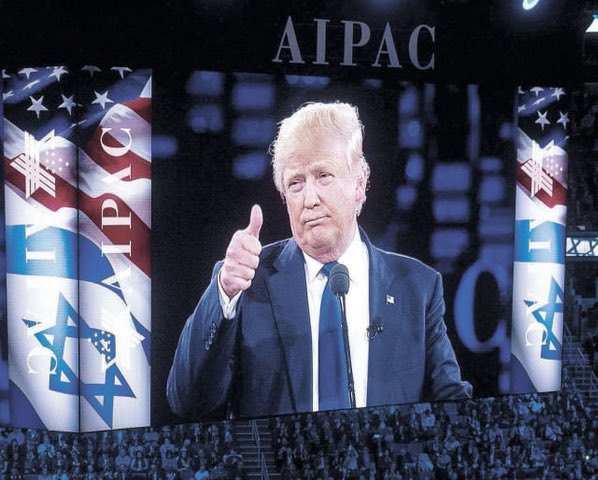
He declared essentially that the yearly US military aid funding to Israel ($3.8 billion a year) – a cornerstone of the US/Israeli relationship – was going to be stopped. “We’ve already agreed that by the end of this year we won’t be paying Israel,” he said.
Now, on the one hand, it’s fairly obvious why he said this the night before mid-term voting was due to take place.
Fully understanding how much the US support for Israel – and Trump’s incestuous relationship with Netanyahu in particular – has been under intense scrutiny, he thought saying this might help retain good will from the elements of MAGA who’ve broken with him over Israel.
It’s been clear that Trump and co have haemorrhaged a lot of support from their previous fans due to the Iran war, the rabid Zionism and the unqualified adherence to Israeli interests.
Trump’s statement obviously didn’t have the desired effect, because it was far too obvious and far too late.
But one would also suspect the statement might not even prove to be honest: whether that US aid package to Israel does get discontinued remains to be seen.
It’s not feasible that the US in general – and the Trump regime in particular – would follow any course that’s disadvantageous to Tel-Aviv. This is the same administration that is so slavishly attached to Netanyahu’s government that it launched a war entirely against its own interests.
A war for Israel that is entirely acknowledged to be a massive reason for the collapse of the Republican vote we’ve just witnessed.
But, more importantly, the President’s additional remark of “They don’t need it” also points to a bigger indication that his statement was a misdirect.
Because, even if that funding package is stopped, the US and Israel have just agreed to a long-term integration of their militaries, as revealed months ago in something titled the ‘National Defense Authorization Act‘ – Section 224 of the which was entitled ‘United States–Israel Defense Technology Cooperation Initiative‘.
And, as Ben Freeman at Responsible Statecraft explained back in May, ‘the provision would arguably do more to intertwine the U.S. military with the Israeli military than the more than $200 billion (inflation adjusted) in military assistance Israel has received from the U.S. since its founding in 1948…’
The article continued, ‘The shift will strip away the political and diplomatic oversight mechanisms that make the relationship publicly accountable, moving it from a visible annual aid vote into the opaque machinery of defense acquisition, where oversight is limited and political accountability is minimal. The result would be a defense relationship that is simultaneously deeper and less transparent… The result could well be a U.S. political system even more susceptible to the whims of an Israeli government that seemingly has no qualms about drawing the U.S. into military conflicts.’
In essence, do Israeli and US militaries now function as one entity?
That’s a huge deal: and it’s something neither Trump or anyone in his administration have really addressed publicly.
Now, obviously, the US has essentially carried out Israel’s foreign policy interests in the Middle East for many years already: most recently in Iran, of course. The Israeli government has essentially used its control in Washington to puppeteer the US into doing much of its dirty work.
But this comprehensive integration of the two countries’ military infrastructure seems like it should be a much bigger deal than has been acknowledged either by the Trump administration or the American media.
By throwing out the comment about cutting aid to Israel, Trump was presumably trying to look like he is addressing the concerns of many of his dissatisfied supporters.
In fact, the comment was just concealing the exact opposite: a move towards the US and Israel essentially achieving greater oneness.
Netanyahu’s notably low-key response to the prospect of the aid cut also suggests his displeasure is merely performative. He knows in fact that the Israelis are getting a better deal than what they already had.
In other words, there’s no change or re-evaluation of the US/Israel relationship happening, as Trump wants his fans to think there is – rather the opposite. Trump and co simply don’t know how to handle the dramatic drop in popular support for Israel, so these misleading statements hinting at change is the best they can do.
It’s unlikely that even his supporters are buying it though.